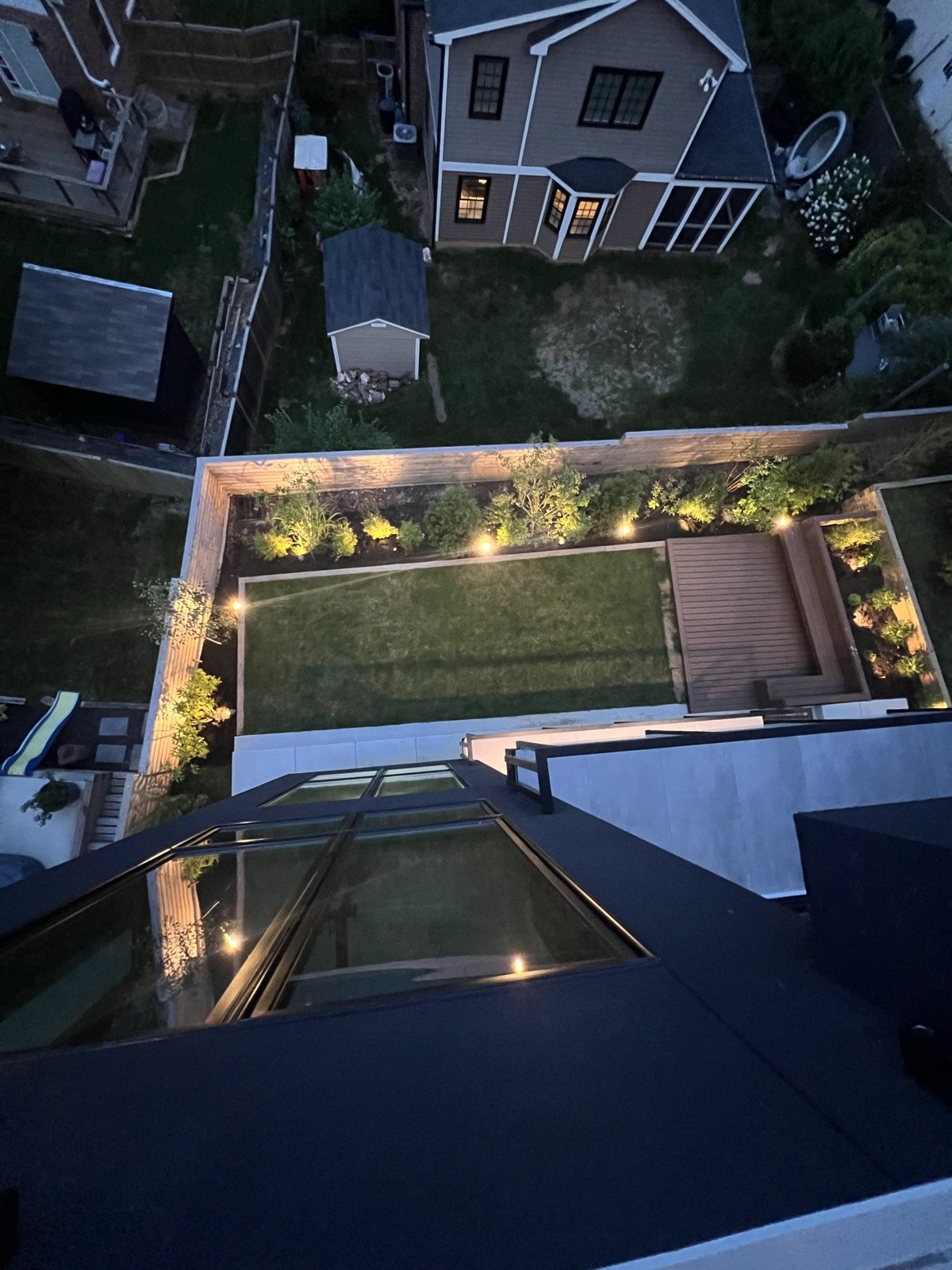
When homeowners in DC, Maryland, and Virginia start planning a deck, the first material question is almost always the same: composite or pressure-treated wood? Both can produce a beautiful, long-lasting deck. The difference is in upfront cost, how much maintenance you're actually willing to do, and how each material handles the DMV's specific climate — humid summers, hard winter freezes, and everything in between.
What Pressure-Treated Lumber Is and What It Requires
Pressure-treated (PT) wood is typically Southern yellow pine infused with preservatives — today most commonly alkaline copper quaternary (ACQ) — that resist rot, fungal decay, and insect damage. It's the most common deck framing material in the country, and for good reason: it's structurally reliable and significantly less expensive than composite.
When used for the horizontal decking boards you walk on, PT lumber performs well but demands consistent maintenance. The DMV climate is hard on wood: hot humid summers followed by cold winters mean the boards cycle through moisture absorption and drying repeatedly. Over time, without annual sealing, you'll see:
- Checking and cracking along the grain as the wood dries out
- Cupping or warping of individual boards
- Graying and surface erosion
- Splintering on high-traffic surfaces
A PT deck that's sealed every one to two years can last 15–25 years. A neglected one looks rough within five and may need board replacement well before the structure fails. Be honest with yourself about whether seasonal maintenance is something you'll actually do — that question drives the material decision more than anything else.
What Modern Composite Decking Delivers
Modern composite decking is made from a blend of wood fiber and recycled HDPE plastic, usually with a protective polymer cap layer on the surface. Today's capped composite — from brands like Trex, TimberTech, and Fiberon — is dramatically better than first-generation composite, which had real problems with fading, staining, and mold growth.
Current capped composite decking resists moisture absorption, doesn't splinter, holds its color for 25+ years with minimal maintenance (occasional cleaning, no sealing), and is available in colors and textures that closely replicate natural wood grain. It's also dimensionally stable — no cupped boards, no checking season to season.
The honest trade-offs:
- Higher upfront cost. Composite decking boards typically run $5–$12 per linear foot installed versus $2–$4 for PT boards. On a 400-square-foot deck, that difference can be $3,000–$8,000 in material cost alone.
- Still needs a PT frame. Composite is used for decking boards only — joists, beams, and posts beneath are still pressure-treated lumber. The substructure still needs inspection and occasional treatment. Composite doesn't eliminate all maintenance; it just eliminates the surface maintenance.
- Heat retention in summer. Dark composite boards in direct Maryland or Virginia summer sun can get noticeably hot underfoot. If your deck has full southern or western exposure with no shade, choose lighter colors.
- Expansion and contraction. Composite expands in heat and contracts in cold more than wood. Proper spacing and hidden clip fastening systems are important — installation technique matters here.
Which Performs Better in the DMV Climate
The DMV sits in a mixed-humid climate zone — exactly the environment that accelerates wood's deterioration most quickly. The freeze-thaw cycles of Maryland and Virginia winters, combined with genuinely humid summers, make the low-maintenance argument for composite strongest here compared to drier climates.
If you genuinely enjoy seasonal yard projects and will reliably seal and inspect the deck each year, PT lumber is a legitimate choice — especially on a larger deck where the cost savings are substantial. If you want a surface that requires nothing more than an annual wash-down and will still look good in 20 years, composite is the better investment despite the higher entry cost.
There's also a premium middle option worth knowing: Brazilian hardwood decking like ipe or cumaru. Naturally rot-resistant and beautiful, these hardwoods are extremely durable — but they're the most expensive choice and require annual oiling to maintain their color. They're a good fit for high-visibility decks on premium homes in Chevy Chase, Potomac, or McLean where aesthetics justify the cost.
One Thing That's Always the Same: Frame It Right
Regardless of which decking board material you choose, the substructure — posts, beams, and joists — should be pressure-treated lumber rated for ground contact (UC4B for any posts set in concrete) with joist tape applied to the top edges of every joist. Water pooling at fastener holes into the top of a joist is the most common cause of premature frame rot we see when we're asked to repair aging decks.
If you're choosing composite boards, use the manufacturer's recommended hidden fastener clip system rather than face screws. It's a cleaner look and keeps the board surface intact over time.